The Asteraviation Method
Beyond theory: developing pilot skills
Training a pilot today means more than just preparing them for exams or logging flight hours; it involves guiding the development of their Pilot Competencies —fostering the technical, operational, and behavioral skills that align with the demands of modern aviation.
The Asteraviation Method integrates training with the development of pilot competencies through Human Factors, CRM, and Threat and Error Management.
In this way, the student learns not only what to do, but also how to use what they know to understand a situation, communicate, manage their workload, and make informed decisions.
How the method is developed
Preparation
Every activity begins with an understanding of objectives, procedures, and the operational scenario. The learner learns to prepare not only to execute, but also to comprehend and anticipate.
Experience
In the classroom, in the simulator, and in flight, knowledge and procedures become skills applied to real-world situations.
Briefing, debriefing, and feedback help the learner recognize their strengths, mistakes, and areas for improvement, turning these into subsequent goals.
Comparison
Prepare, apply, improve
The Asteraviation Method develops both technical and non-technical skills through a continuous cycle.
Before the flight, the student prepares objectives, procedures, and potential challenges. During the activity, they apply what has been prepared, managing information, priorities, and decisions. Afterward, they analyze their performance and any errors with the instructor to identify areas to consolidate.
- prepare the activity and understand its context;
- apply knowledge and procedures;
- analyze performance and decisions;
- transforming feedback into the next objective.
In this way, each session contributes to the student’s technical and professional growth.
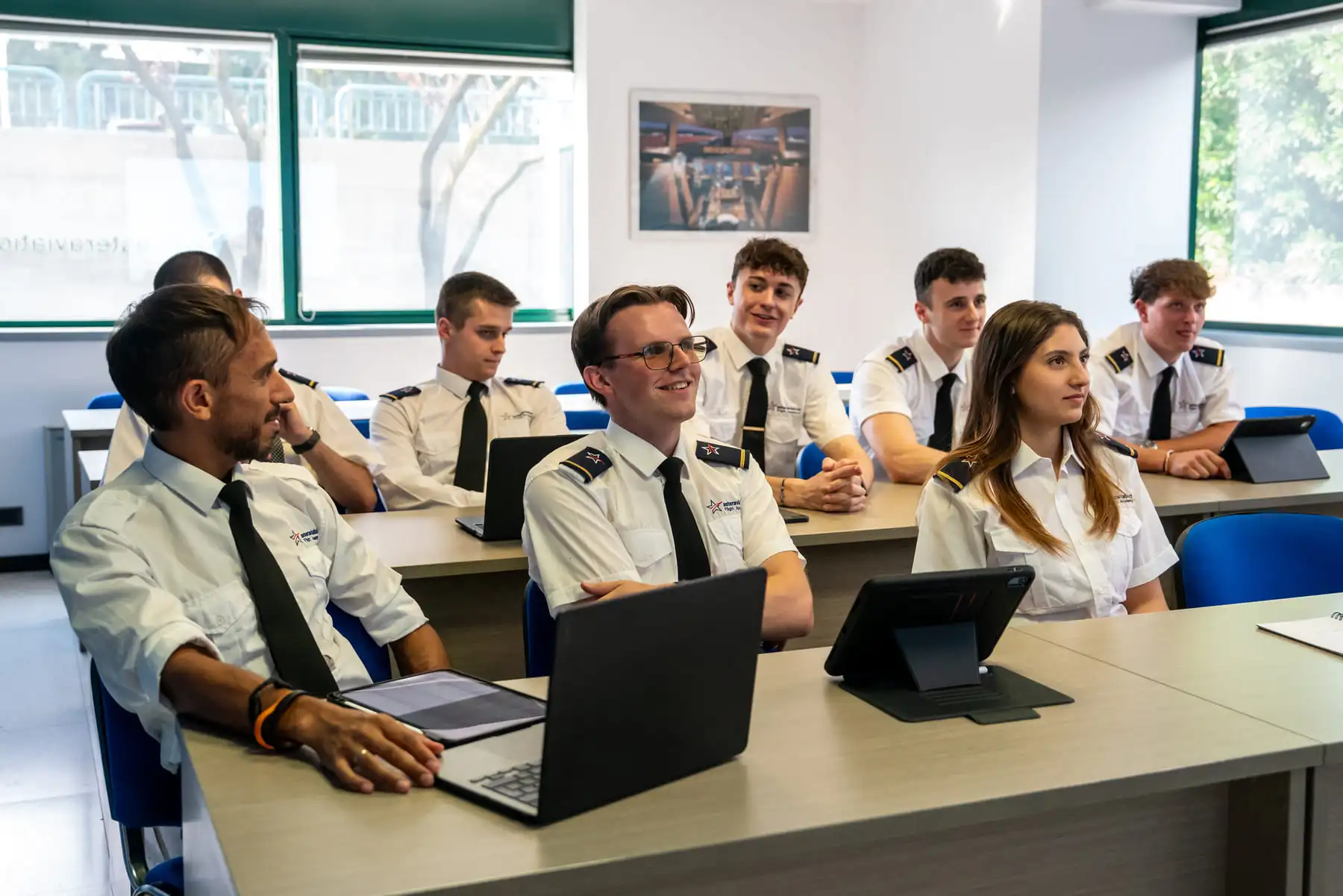
From knowledge to operational competence
Meteorology, navigation, performance, and procedures are fundamental. But their true value emerges when the student learns to use them to assess a real-world situation and decide how to act.
For this reason, theory and practice do not unfold as two separate paths: what is studied is applied in flight and in the simulator, analyzed with the instructor, and progressively transformed into operational competence.
Not just concepts to be remembered, but tools to be used at the right moment—with method and awareness.
Feedback accompanies growth
A final result tells only part of the story. In the Asteraviation Method, how a student reaches that result also matters: how they prepare, the decisions they make, how they manage information, and how they respond to mistakes.
Through briefings and debriefings, instructors transform the insights gained from each activity into concrete objectives for subsequent ones.
This work is complemented by the contribution of specialists in aviation psychology and Human Factors, who support the development of non-technical skills throughout the training process.
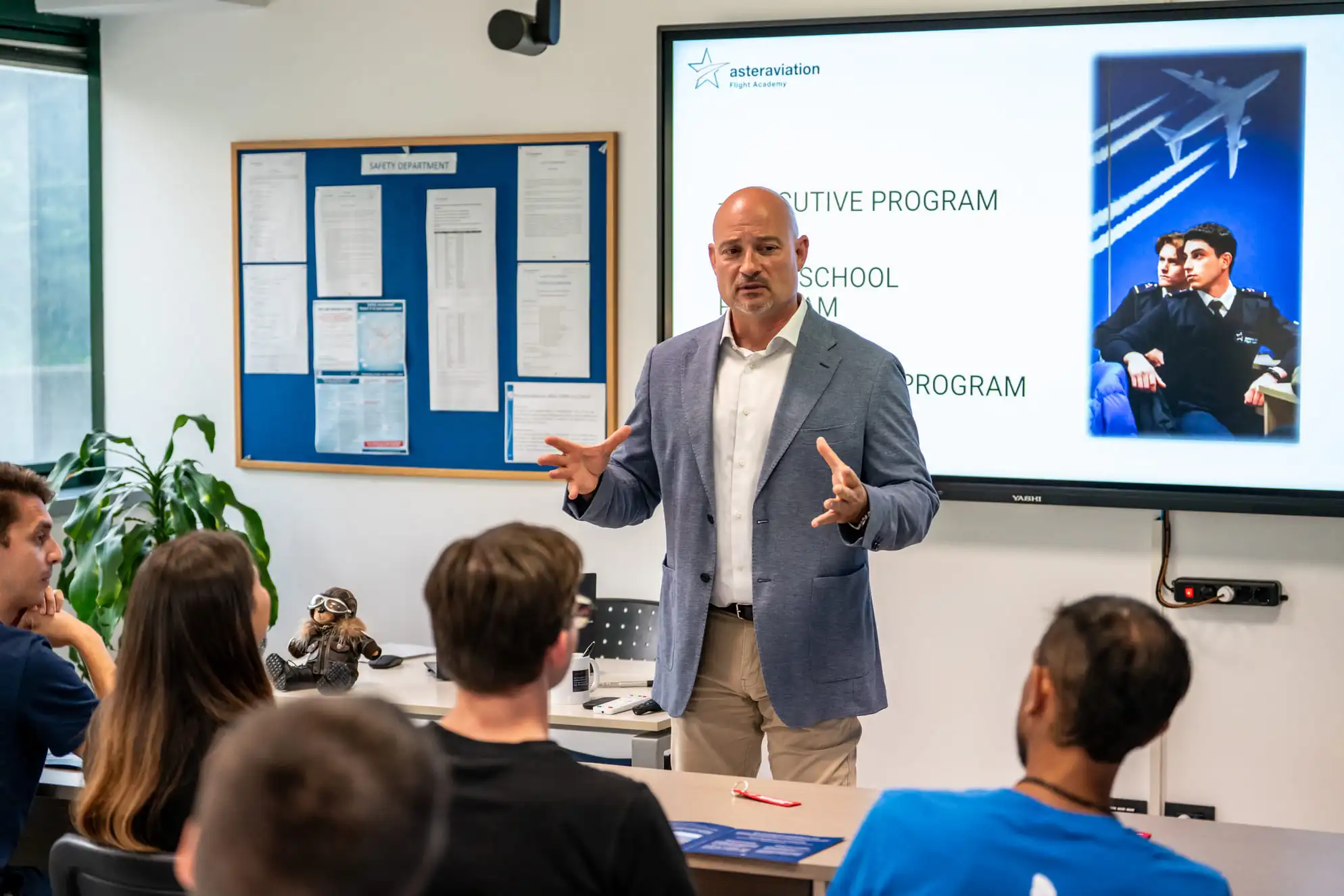
Over 100 hours with aviation psychologists
dedicated to the development and consolidation of non-technical skills.
Around 30 professionals for 30 students
If one also includes the psychologists involved in the training, the ratio comes to approximately one professional per student.
Pilot Competencies: learning to think like a pilot
Today, an airline does not just evaluate how well a candidate can fly an airplane. It assesses how they apply their knowledge when it comes to operating, communicating, making decisions, and managing a real-world situation.
In the Asteraviation Method, these skills are not introduced at the end of the course in preparation for a selection process: rather, they are developed from the very beginning alongside technical training, through Human Factors, CRM, and Threat and Error Management.
A path built upon the student’s progression
Every student is different. The name Asteraviation stems in part from this very idea: each individual is a star in their own right, with their own unique characteristics, pace, and potential.
As early as the Cadet Aptitude Day, strengths, aptitudes, and areas for improvement begin to emerge.
Personalizing the learning path does not mean lowering standards. It means identifying the most effective way to reach them, taking into account the student’s starting point and actual progress.
The standards remain the same. The path to reaching them takes the individual into account.
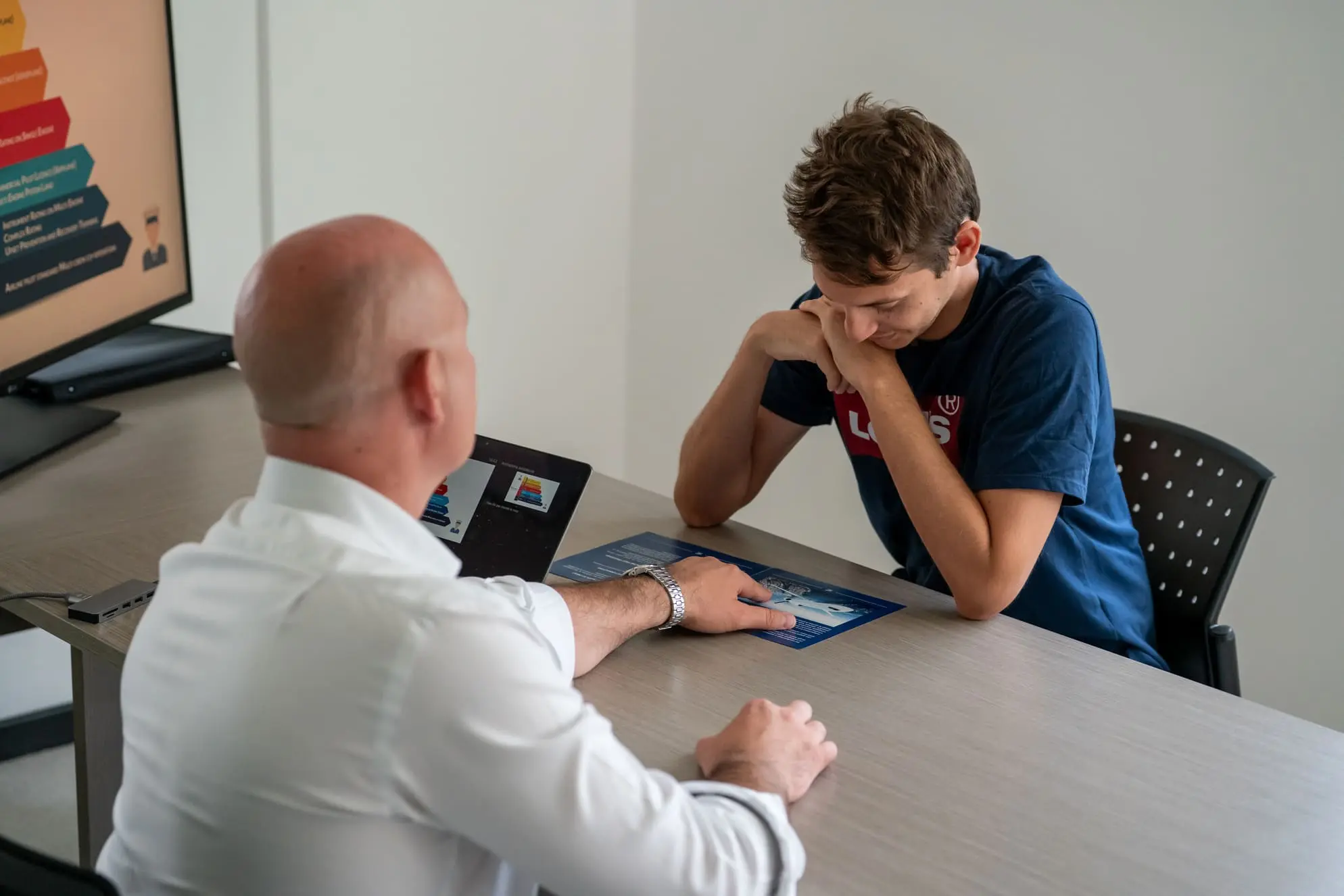
From training to airline selection processes
Obtaining a license is a significant milestone, but joining an airline also requires the ability to handle interviews, aptitude tests, group exercises, and simulator evaluations.
Work on Pilot Competencies also supports the student as they approach this transition, enabling them to arrive at selection processes with skills developed over time and a greater familiarity with what airlines look for.
The specific preparation for the selection process is then tailored to the company to which the student is applying.
The method as described by the students
“I liked the fact that every lesson had a concrete follow-up. After the activities, we would discuss things with the instructors, figuring out what went well and what to work on next time. This way, you don’t just learn how to carry out a procedure; you also learn how to think critically and make decisions with greater awareness. For me, that really made a difference throughout the program.”
Questions about the Asteraviation Method
How does the Asteraviation Method differ?
The Asteraviation Method integrates technical training with the development of Pilot Competencies, applying Human Factors, Situation Awareness, Decision Making, CRM, and Threat and Error Management throughout the training process.
Can the program be adapted to the individual student?
What role do aviation psychologists play in training?
What role do simulators play?
When does preparation for an airline mindset begin?
Experience the Asteraviation Method firsthand
The Asteraviation Method is even better understood when you see how it is applied.
During the Airline Pilot Open Day, you can discover how Asteraviation integrates technical training, pilot competencies, human factors, CRM, and an airline mindset into a single training program.
It is also an opportunity to get to know the team, learn more about how the training is organized, and evaluate the program firsthand.
Get an up-close look at the Asteraviation Method and speak directly with the team.